Why we need cache?
- The system spends a lot of time moving data, information from one place to another
- Due to physical limitations:
- larger the storage device, slower it is
- cheaper the storage device, slower it is
- So, hard disks are slower than RAMs
- RAMs, too, are on the slower side when it comes to executing programs fast.
What are cache memories?
- Smaller, faster storage devices that serve as temporary staging areas for information that the processor is likely to need in the near future
- Caching can get the effect of both a very large memory and very fast one by exploiting locality.
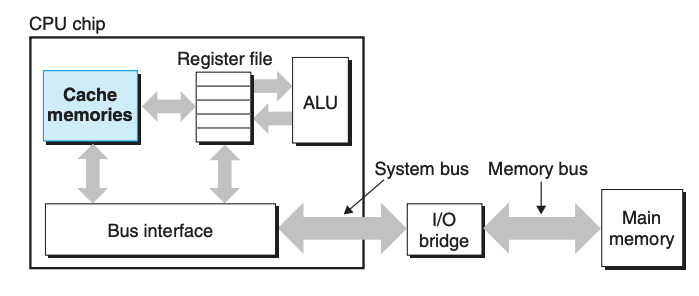
L1 and L2 cache memories
- Both L1 and L2 are implemented using a hardware technology called Static random access memory (SRAM)
- L1 cache: Can hold tens of thousands of bytes and can be accessed nearly as fast as register file
- L2 cache:
- Larger than L1
- Hundreds of thousands to millions of bytes
- Around 5 times slower than L1, still 5 to 10 times faster than main memory.
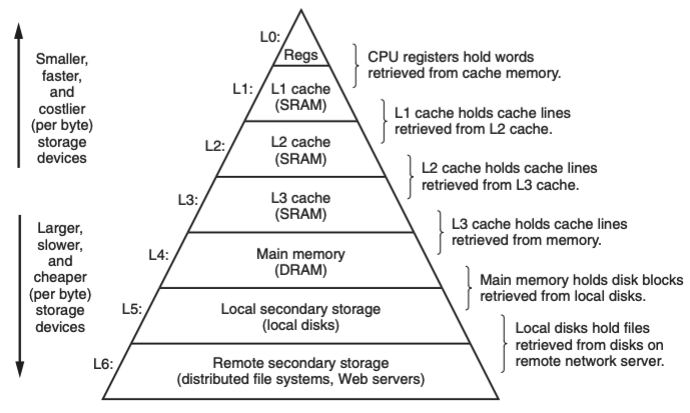
Example of memory hierarchy
Sources