Porn pioneered elements of the global online advertising industry such as targeted advertising, pay-per-click and email marketing and is today a substantial part of the internet economy. So-called “tube” sites have also courted controversy over videos with links to exploitation of children and sex trafficking. (View Highlight)
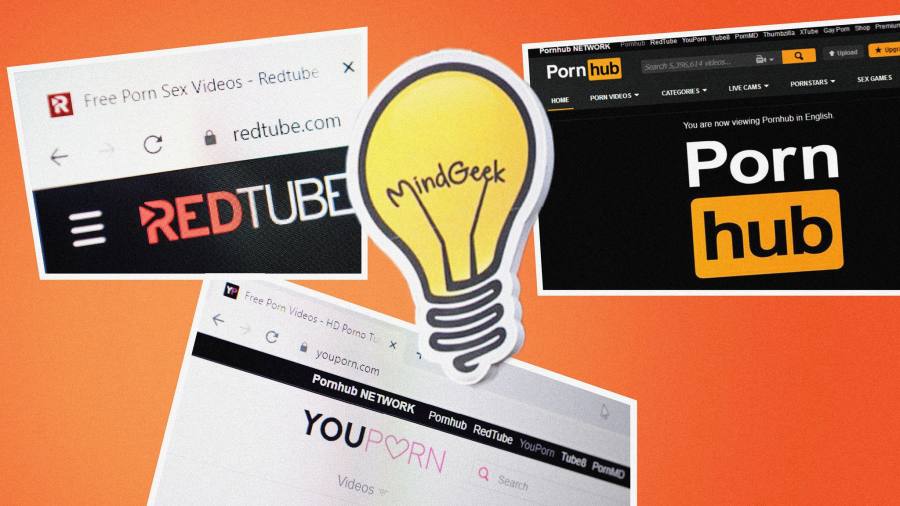
No entity exemplifies this more than MindGeek, which with very little scrutiny or accountability, has quietly become the dominant porn company. The Montreal-based business is the owner of several of the sector’s most visited sites including Pornhub, RedTube and YouPorn. At least according to public financial records, MindGeek towers over the pornography industry in Europe and America. (View Highlight)
Despite this, basic facts about the company are largely unknown. That includes its main owner — a businessman called Bernard Bergemar, whose name is almost completely invisible on the internet but who has a claim to the title of the world’s most successful porn tycoon. Until this Financial Times investigation, his identity was secret, known only to a small circle of MindGeek executives and their advisers. (View Highlight)
Every day, roughly 15 terabytes worth of videos get uploaded to MindGeek’s sites, equivalent to roughly half of the content available to watch on Netflix. (View Highlight)
MindGeek and entrepreneurs such as Mr Bergemar have remained largely in the shadows. MindGeek’s early lenders — including Wall Street names such as JPMorgan — made sure to also hide from view. And regulators have steered clear of asking too many questions. (View Highlight)
But a vast amount of pornography available on free-to-watch tube sites is stolen. Jason Tucker, president of copyright enforcement consultancy Battleship Stance, says porn is the most pirated content in the world simply because “it is the most desired content in the world”. (View Highlight)
The man who defined the new era of porn was Fabian Thylmann. As a teenager in Germany in the late 1990s, he developed one of the first pieces of software that enabled website owners to charge for advertisements by tracking what visitors clicked on. It offered a glimpse of how lucrative online marketing could be if only there was something to attract crowds — such as free videos of people having sex. (View Highlight)
With money made from his first venture, Mr Thylmann, began snapping up fledgling porn sites and production companies, which were struggling to compete with free sites full of videos ripped off from them. His stroke of luck came when he learnt that the Montreal-based groups behind Pornhub and Brazzers — which in 2010 were already profitable businesses and well-known brands — were up for sale. (View Highlight)
As a result of the deal, worth more than $130m, Mr Thylmann was desperate for cash to expand his porn empire, then called Manwin. Mr Thylmann did not respond to requests for comment but in 2016 told attendees at a start-up conference that venture capitalists had been wary, telling him “the numbers look great, but it is porn, so I can’t get this past my board”. (View Highlight)
The solution came in 2011, in the form of $362m in debt from 125 secret investors that — according to one financial backer — included Fortress Investment Group, JPMorgan Chase and Cornell University. The two firms declined to comment, while the university said that its investment managers’ portfolios are confidential. (View Highlight)
The funding helped the software developer expand from 200 to 1,200 staff within three years, with dozens of corporate offshoots stretching from Montreal and Luxembourg to Ireland, Cyprus and the British Virgin Islands. (View Highlight)
His run as one of the world’s most powerful people in porn came to an abrupt end in late 2012 when German public prosecutors charged him with tax evasion. Soon after, he sold the company to senior managers Feras Antoon and David Tassillo, who renamed the company MindGeek and now run it out of Montreal. They both declined to comment for this article. (View Highlight)
Detailed data tracking the sexual fantasies of hundreds of millions of people direct what MindGeek orders production studios to shoot for their subscription pages, which are then promoted on the company’s vast network of tube sites to tap into their massive audience. If the “free” product flops, audiences for premium products grow and vice versa, leaving MindGeek profiting either way in what Mr Thylmann called “in-house competition”. (View Highlight)
Yet, until its most recent accounts in 2018, MindGeek had made only modest profits. Pre-tax profit reached 38.3min2018,upfrom9.7m in 2017 and 26mtheyearbefore,withnetrevenueshoveringjustunder500m. (View Highlight)
The legacy of Mr Thylmann’s deal with lenders is one potential explanation for the modest profits, with MindGeek’s accounts showing it has for years paid an annual 20.4 per cent interest rate on outstanding debt that in 2018 reached $370m. (View Highlight)
But money is also funnelled into a complex network of subsidiaries that MindGeek owns less than a third of and in which Mr Bergemar holds a significant set of shares, according to a person close to the company. These corporate branches, which control a network of companies to which MindGeek pays licence fees for its various brands and issue dividends to their undisclosed owners, were set up shortly after the porn company swapped hands in 2013. (View Highlight)
Mr Bergemar does not feature in the porn company’s corporate filings and declined to speak to the FT. But several sources confirmed that, through a complex structure involving shares in MindGeek-controlled subsidiaries, Mr Bergemar is the group’s largest owner and biggest beneficiary. (View Highlight)
Bandwidth data by network firm Sandvine confirms that Pornhub is the world’s most popular adult site. Rival Xvideos comes close, but MindGeek controls an entire network of related businesses, with arms such as TrafficJunky and age verification service AgeID strengthening its arsenal of top-ranking tube sites and subscription platforms. (View Highlight)
MindGeek frequently takes smaller players to court for failing to take down pirated content, often using a Cyprus-registered subsidiary that has sent over 213m requests to Google, demanding it delists illegally shared content. (View Highlight)