- Network of geographically dispersed servers used to deliver static content
- Cache static content like images, videos, CSS, Javascript, files, etc
How it works?
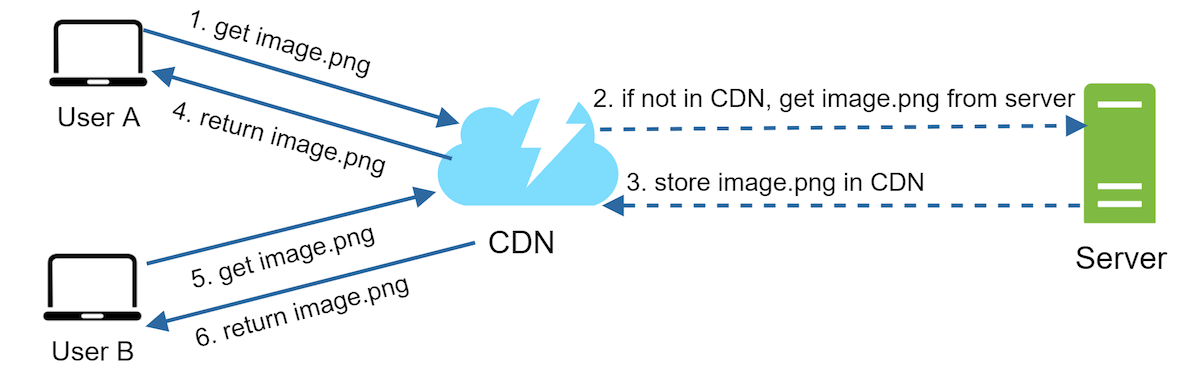
- The image below describes the working of a CDN
- The image returned by the ‘server’ may include a HTTP Header - Time to Live (TTL) which describes how long the image should be cached by the CDN
- The images remains cached until the TTL expires
Caveats
- Do not cache content that are infrequently used
- Set a expiry time (TTL) for time-sensitive content
- Consider how your application copes with CDN failure. In case of failure, clients should be able to fetch content from the origin server
Invalidating files in CDN
- Invalidate the CDN object using APIs provided by the CDN vendor
- Use object versioning to serve a different version of the object. For example, you can add a query parameter to the URL to version an object
Sources